
Everything Everywhere All at Once
Undoubtedly one of the most stylistically bold movies of the year
This feted slice of absurdist indie cinema contains far more 'madness' than Marvel's most recent foray into multiversal storytelling, but isn't necessarily any more intelligent. Penned and directed by the innovative duo known as the Daniels, Everything Everywhere All at Once is undoubtedly one of the most stylistically bold movies of the year. Put simply, it is a smorgasbord of cultural and socio-political references and perhaps one of the most visually arresting films this writer has ever seen.
However, it is essentially an overwrought allegory of patriarchal anguish that doesn't say enough to warrant a runtime in excess of two hours. While it may most obviously bear similarities to sci-fi innovations such as The Matrix, it doesn't quite manage to ascend to the mantel of being a definitive pop culture touchstone.
None of that means, of course, that it isn't a hell of a lot of fun. Because it really is. If you never thought you'd live to see what Jamie Lee Curtis looks like with hot dogs for fingers, think again. That - and a whole host of other weirdness - can be found here. And Michelle Yeoh's performance as a repressed, dimension-hopping matriarch is worth the price of entry alone.
While this didn't quite live up to the lofty expectations I'd set it, it's a deeply impressive and highly immersive piece of filmmaking which is a darn sight more original than most of the other flicks that'll be screening this summer.

Doctor Strange in the Multiverse of Madness
Sam Raimi returns to the superhero genre but the auteur finds himself straight-jacketed within the MCU.
Sam Raimi makes his return to the superhero genre with this long-awaited sequel to Doctor Strange, further embellishing on the multiverse arc that was introduced in Loki and properly fleshed out in last year's Spider-Man: No Way Home.
The trailer for this flick certainly promised much, including a number of tantalising live action interpretations of characters from the popular What If? animated series. And yet, as is so often the case, the promotional material doesn't really translate into the finished product.
For me, Raimi is straight-jacketed by the well-established - but undoubtedly formulaic - MCU approach to film-making. There was talk of this being Marvel's first horror movie, but I'm not sure even the underage kids who sneak into its screenings will be disturbed by anything they see on screen. Needless to say, Evil Dead this ain't.
Akin to the first Doctor Strange flick, the most impressive aspect of this film is its aesthetic. There are some mind-bending visuals that really establish the multiverse as something completely different from what we have seen in the MCU to date. But for those visuals to be anything more than superficial, the drama needs to be engaging and, for the most part, the Multiverse of Madness isn't.
That's not down to any lack of effort on the cast's part - Benedict Cumberbatch is dependable as ever in the lead role, newcomer Xochiti Gomez is great and Elizabeth Olsen in particular is tremendous as the anguished Wanda Maximoff. But the material they're given to work with ultimately feels like a retread of things we've seen before - the cocksure hero who finds himself out of his depth, the unsure newbie who can't control their powers, and an antagonist whose heart isn't really in it.
Maybe I'm just getting too old for this sort of stuff, but MCU's big screen releases have felt really flat as of late. Sure, they still provide a good afternoon out of the house but there isn't much in the way of originality to be found here.

The Unbearable Weight of Massive Talent
Nicolas Cage uses his 'shamanic' acting talent to help the CIA extricate a politician’s daughter from a kidnapping. Yes, you heard me right.
Until last night, I thought that Donald Trump being elected President of the United States was (probably) the weirdest thing that has happened in my lifetime. And then I watched The Unbearable Weight of Massive Talent, a film in which Nicolas Cage plays, erm, himself.
If that concept alone isn't weird enough for you, then allow me to inform you that in said film Cage uses his 'shamanic' acting talent to help the CIA extricate the President of Catalonia's daughter from a kidnapping. Mind still not blown? Okay, how about if I tell you that the CIA's main suspect is an unashamed Cage fan-boy (played by Pedro Pascal) who has spent a minor fortune to bring the actor to Mallorca so that they can work on a screenplay together.
If there's one thing you can say about Tom Gormican's film, it's certainly unique. Both a homage to Cage himself and the sort of logic-defying, batshit crazy action flicks he has long been synonymous with, it is also a tongue-in-cheek roast of the Hollywood machine and its penchant for building stars up before quickly discarding them as yesterday's news.
Cage is an absolute riot in a role that (pardon the gag) he was born to play. Fair dues to him for having the humility to embrace this project and knowingly riff on the notion of him being one such forgotten star, as there's plenty of comparable actors who probably wouldn't do the same. And props to Pascal, with whom he shares the sort of bromance chemistry that makes madcap films such as these.
To say any more about this flick would be to spoil its strange ethereal majesty - seeing truly is believing in this instance.

Turning Red
An ingenious allegory about the onset of womanhood, this is yet another triumph from everyone's favourite studio.
Pixar have always had a knack for delicately commenting on topics that, while not exactly taboo, aren't always par for the course. Whether it's the fear of being replaced (Toy Story), the afterlife (Soul), grief (Up), mental health (Inside Out) or any of the array of other subjects they've explored, it is almost always done both beautifully and tastefully.
Turning Red is no exception. While there are probably writers better placed to muse on it (specifically ones that aren't male) than this one, it is easily one my favourite films of the year so far. Telling the story of a teenage girl who mysteriously begins transforming into a giant red panda every time she gets emotional, it is an ingenious allegory about the onset of womanhood.
Featuring a stellar voice cast led by Rosalie Chiang, the film also explores the enduring appeal of manufactured pop music, the trials and tribulations of senior school and, most interestingly, the engrossing myths of East Asian culture. Props must go to director and co-writer Domee Shi for taking such a cauldron of themes and turning it into a film that is as entertaining for adults as it doubtlessly is for kids.
This is filmmaking that warms the heart and educates the mind, and yet another triumph for everyone's favourite studio.

The Northman
While it’s debatable whether this is Robert Eggers’ best work, it’s certainly his most ambitious.
In recent years, Robert Eggers has established himself as one of modern cinema’s most unique voices. Beginning with the Puritan horror of The Witch and then progressing to the hallucinogenic machismo of The Lighthouse, his films tend to live long in one’s memory. His latest, an uber-violent Nordic revenge fantasy, is no different.
The Northman is Eggers’ own take on the Norse myth that inspired Hamlet, and the parallels with the Shakespearian masterpiece are apparent from the film’s opening moments. It’s there that we see King Aurvandill War-Raven (Ethan Hawke) betrayed by his brother Fjölnir (Claes Bang), causing the former’s heir Amleth to flee his kingdom and setting in motion a long-gestating quest for vengeance.
Unsurprisingly, Amleth grows us to be an aggressive so-and-so with a penchant for bloody murder. He is played in adult form by Alexander Skarsgård, here rocking abs and traps that are impressive enough to be the envy of even the most seasoned gym rat. In a hyper-physical performance, the Swede perfectly depicts rage personified and ensures the ferocious action of The Northman remains anchored by an emotive story that you wish to see resolved.
Eggers naturally brings his own directorial flair to proceedings, which helps his film refrain from being merely an arthouse version of 300. Both he and Jarin Blaschke do a fine job of transforming rural Northern Ireland into the Nordic valleys of yesteryear, imbuing The Northman with an aesthetic that belies its bestial events.
While it’s debatable whether this is Eggers’ best work, it’s certainly his most ambitious. In cast and scale alone, this is befitting of the term blockbuster. And, though much may feel familiar, it serves as a reminder that the myths of old can be just as rewarding as newfangled tales of today. Unless you’re especially queasy, in which case you might want to give this a miss.
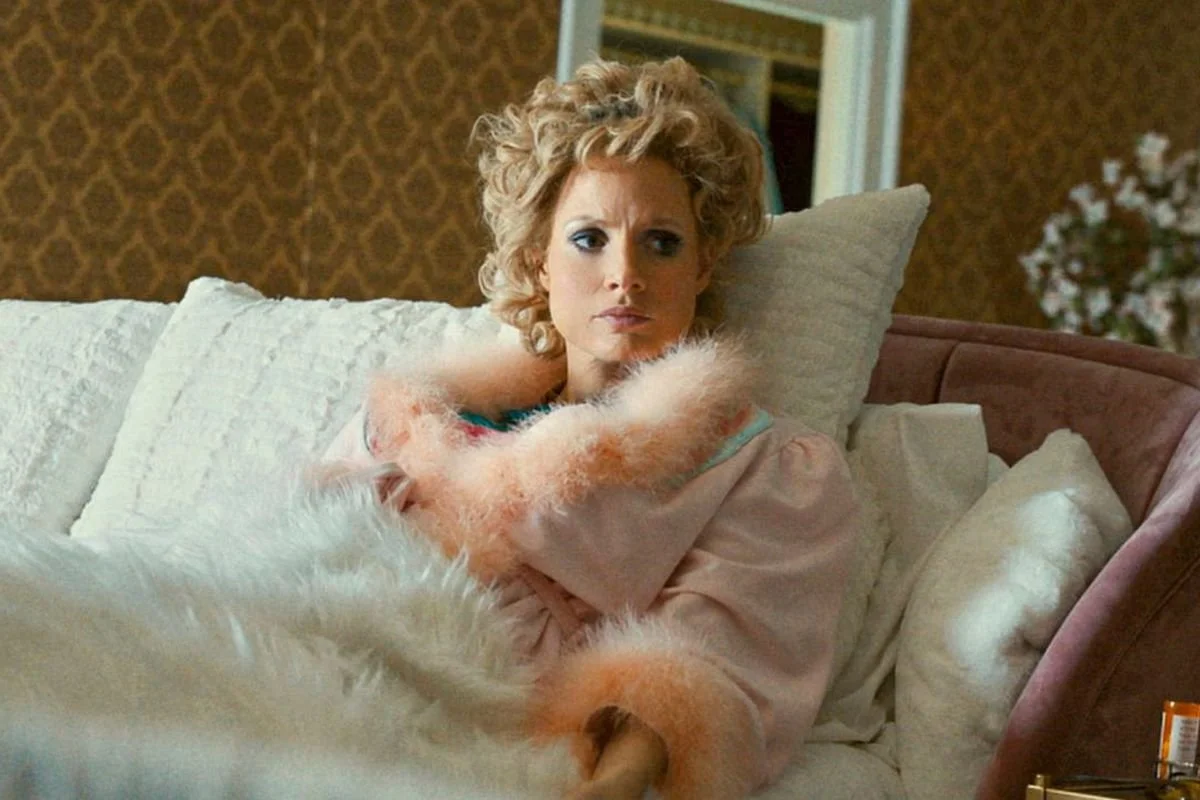
The Eyes of Tammy Faye
Characters as absurd as Tammy Faye Bakker deserves a larger than life performance, and Jessica Chastain is more than willing to oblige.
Some say that religion brings out the worst in people. While that argument might be a tad simplistic, it's fair to say that organised religion does attract its fair share of hypocrites. For evidence of that, look no further than disgraced televangelists Jim and Tammy Faye Bakker, who both get the biopic treatment in Michael Showalter's brazen film.
Characters as absurd as the Bakkers deserves a larger than life performance, and Andrew Garfield and (in particular) Jessica Chastain are more than willing to oblige. The latter is almost unrecognisable as Tammy Faye, whose bizarre getup ensures she stands out from the crowd. Roles such as this are a gift to any actor, let alone one as talented as Chastain, and this makes for some riotous moments, including one or two ear-splitting musical numbers.
While Showalter and writer Abe Sylvia offer little beyond the familiar 'rise and fall' life story formula, this is an undeniably entertaining film similar in vein to Behind the Candelabra (to give but one example). The likes of Tammy Faye are so bespoke to American culture that you can barely believe they exist, let alone managed to make a fortune.
Stranger than fiction, it is almost as if their lives were intended to be retold on the big screen. A gift for us viewers, but not exactly a comfort for those who fell foul of them.

The Bubble
Put simply, there is nothing original to be found in The Bubble.
And just like that, we have our second turkey of the year. However, unlike Morbius, this one comes as something of a surprise. Judd Apatow has been involved (directly or otherwise) in some of the most original comedy films of the last few decades and, while it's been a while since he's served up a gem, it's still pretty shocking to see him put his name to something this uninspired.
Put simply, there is nothing original to be found in The Bubble. Even the concept of a meta take on the COVID-19 pandemic isn't that new, and we're only two-and-a-bit years into the bloody thing. Cue a painfully unfunny couple of hours in which a string of lame observations (i.e. aren't celebrities overprivileged and out-of-touch? And aren't franchises ruining cinema?) are repeated ad nauseam.
Given the quality of the cast involved, one suspects this sorry affair might have been funnier had the actors played over-exaggerated versions of themselves rather than fictional characters. But that might just be me letting Apatow off the hook because I'm such a big fan of his previous work. In short, he really should (and could) have done much, much better than this. One to avoid.
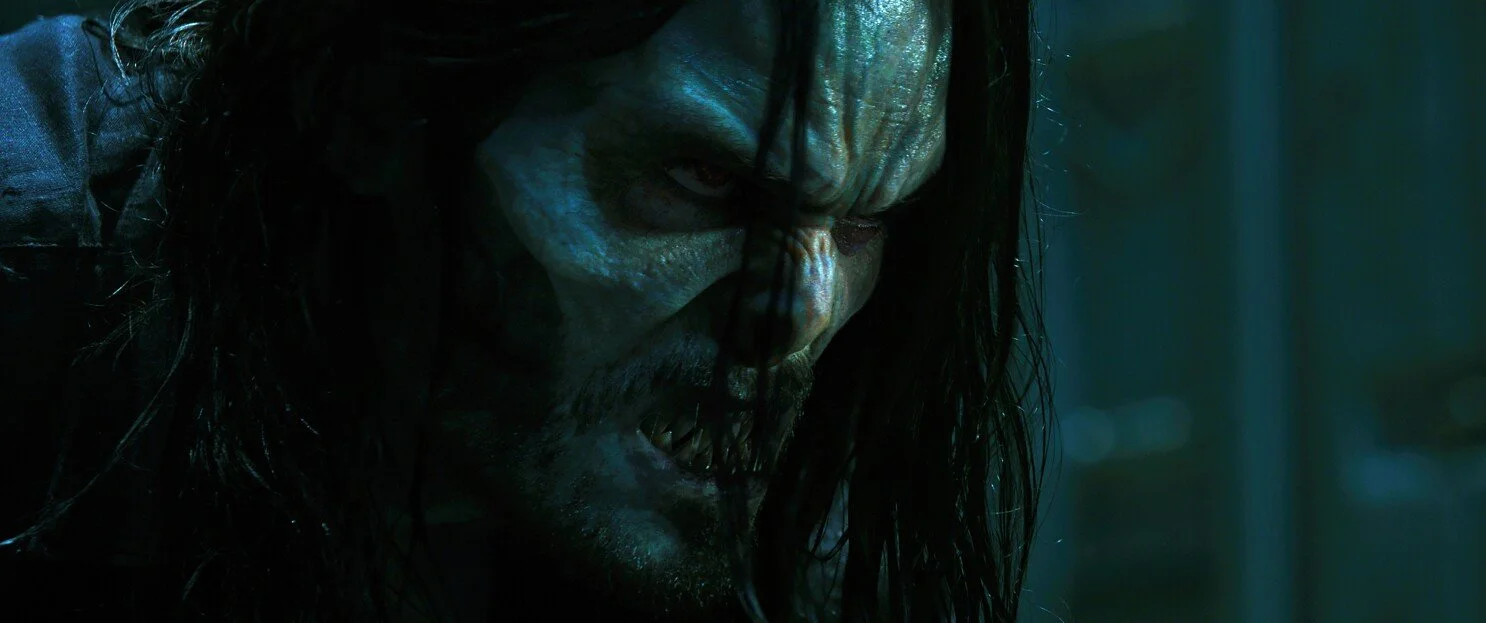
Morbius
Hollywood A-lister in the lead role? Check. An obscene amount of CGI effects that will look cool on their expensive televisions? Check.
If you thought the Venom films were tosh, then wait until you cop a load of Morbius. This is the sort of creatively bereft, paint-by-numbers approach to filmmaking that gives comic book adaptations a bad rep. From the get-go, it's clear that Sony are trying to repeat the formula that made the aforementioned Venom films such a hit at the box office. Hollywood A-lister in the lead role? Check. An obscene amount of CGI effects that will look cool on their expensive televisions? Check.
The issue with Morbius is that a) the character is not as well established in pop culture folklore as Venom and b) Jared Leto does not have the everyman appeal of Tom Hardy. In fact, Leto is probably one of the most polarising actors of his generation. Seriously, have you ever known someone to flip-flop between critical acclaim and universal ridicule so frequently? Though, in his defence, he isn't the worst actor in this film. That would be former Doctor Who Matt Smith, who here gives us one of the most unintimidating, goofy villains I ever did see.
It's easy to poke fun at films like Morbius but, on a serious note, this sort of filmmaking really is an affront to its genre. This is so far removed from the work being done by the creative teams who are spearheading the MCU and DCEU currently, but leaves both wide open to the sort of snobbish snipes that are so frequently (and lazily) aimed at them. Fans of both will of course know better, but I still think there ought to be no room for these sort of wearisome affairs.
More pressingly, the titular character looks more like an ape than he does a vampire. Yep, they couldn't even get that right.